For published per-acre price ranges, read our land clearing cost guide.
Start with what the land is for
What you plan to do with the land shapes most of the scope. A house pad or shop needs something different from a pasture edge, garden or cleared view. When we walk the site, we review access, terrain, vegetation, boundaries, nearby structures and the reason you are clearing the property.
Put the reason in one line. For example, "open the back half for a garden and keep the oaks by the house." That line guides every other decision in the scope.
Mark the boundaries and the trees that stay
Walk the edges, mark them on the ground with stakes or flagging tape, and add them to a simple property sketch. If the property line matters, know where it is before clearing starts near it.
Then mark the trees you want to keep, one by one, with ribbon or paint. Do the same for shrubs, a fence row or a stand of trees you want left. Our estimate identifies the trees, brush or sections included and how the material will be handled, so the ground markings should match the estimate.
What is growing out there
An acre of briars and saplings takes different work than an acre of mature trees growing close together, even when both look alike on a map. Roadside photos show the edge. The middle of a wooded lot may be much thicker.
Our land clearing projects are evaluated one at a time and may include brush, undergrowth, unwanted trees and lot cleanup. The crew confirms whether the equipment and scope fit your site. In the scope, state which of those the job covers and whether it covers the full area or only part of it.
Access, gates and the route in
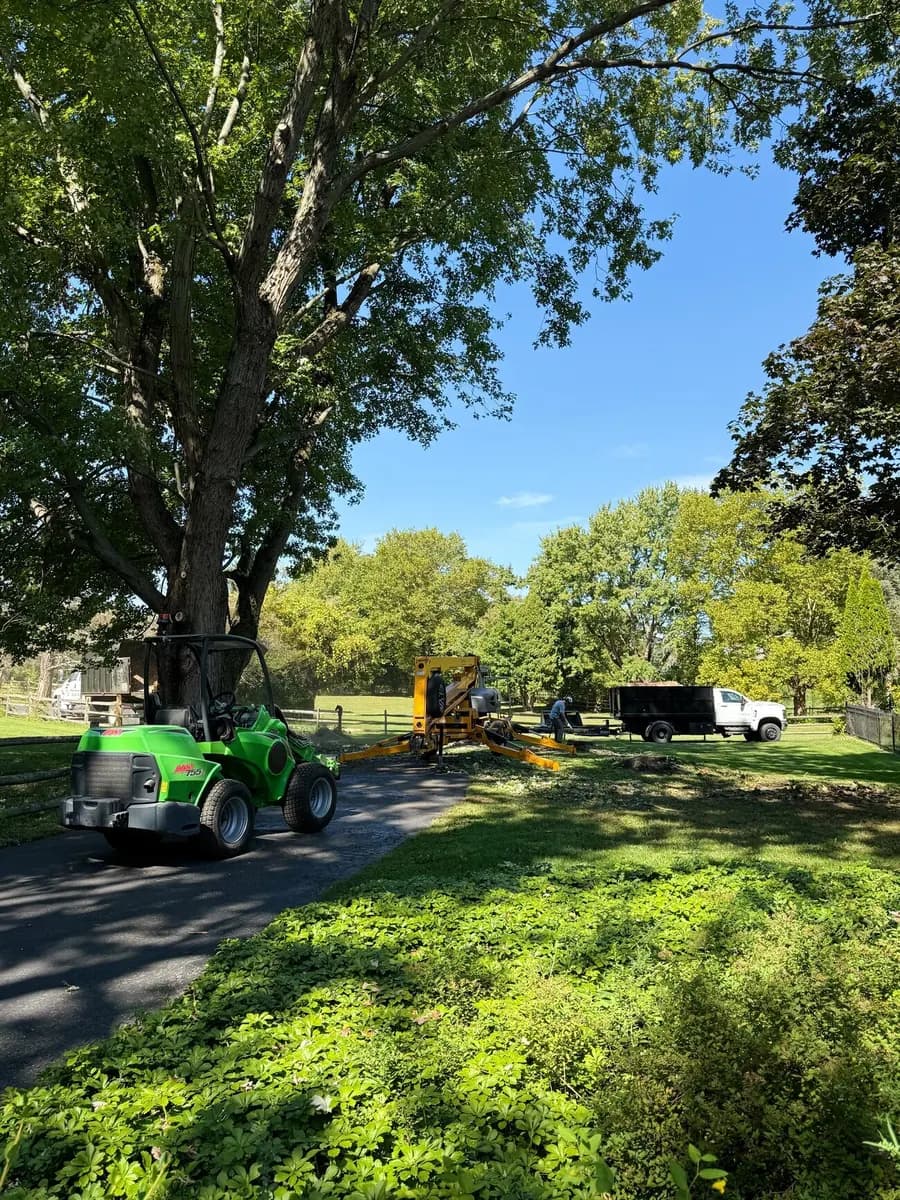
Equipment needs a way into the work area and a way to move material out. Write down how the crew gets in:
- The gate or entrance, and how wide it is
- The route from the road to the work area, and anything along it that must not be driven over
- Where trucks and trailers can park and turn around
- Whether a fence section can come down for the job, or has to stay up
If you plan on gravel, a new drive or a house pad later, put that in the scope. The clearing route and the builder's route may use the same ground.
Slope and soft ground
Mark steep parts of the lot and spots that stay wet after rain. Point them out when we walk the site. One customer's review of a tree removal job mentions "three difficult trees on a steep down hill slope."
Decide what happens to a cleared slope after the job. If you plan to seed, sod or plant it, add that to the scope, along with who is doing it and when.
If you are clearing land to build on it, check whether the project needs a construction stormwater permit. Among the cases listed by the Alabama Department of Environmental Management (ADEM), permit coverage is required for "a site that will disturb one or more acres of land." It also covers a smaller site that is part of a common plan of development or sale that will ultimately disturb one or more acres, "such as a home lot in a residential subdivision." ADEM lists silvicultural activities and normal agricultural activities among those that do not need coverage, and it reviews projects by email for owners who are still unsure.
Protect what stays
List everything that has to make it through the job untouched, then show it on the sketch:
- Fences, gates, sheds and other buildings
- The driveway, walkways and any curbs
- The septic tank and drainfield. The EPA's septic care page says, "Do not park or drive on your drainfield."
- A well head
- Overhead power lines, and any buried lines you know about
When we walk the site, we review nearby structures and identify obstacles. One tree removal customer wrote that the crew "carefully removed and returned all items that were in the way of the work area." If a trailer or woodpile has to move for the job, write down who moves it.
Stumps: ground or left
Decide what happens to each stump, or to each area of stumps. Grinding reduces the stump below grade; it does not excavate the entire root system. How deep a stump gets ground depends on the stump, nearby obstacles and the future use of the area, and the crew confirms that during the estimate. Our stump grinding vs. root removal guide explains the difference in more detail.
Some owners want every stump ground so the area can be mowed, seeded or landscaped. Others leave stumps in a wooded buffer or along a fence row. Write down which stumps are included, and read about stump grinding if most of the lot will be ground.
Grinding goes below the surface. According to Alabama 811, if your project involves digging, contact 811 before you start. A locate request is free, you can submit it online or call 811, and it needs 2 to 10 full working days of notice, not counting the day you submit it. Utility companies mark lines with paint or small flags, and the markings show approximate locations.
Debris: haul, chip or stack
Every tree and brush pile that comes down needs a place to go. On our land clearing jobs, hauling, stacking, chipping or other handling should be defined in the written estimate before work begins.
Put these answers in the scope:
- Which material leaves the property and which stays
- If brush is chipped, where the chip pile goes, or whether the chips are spread
- If logs stay, where they are stacked and at what length
- Whether small limbs and leaves are raked up or left
Burning is a separate question with its own permit rules, covered in our cost guide.
Pick a finish level
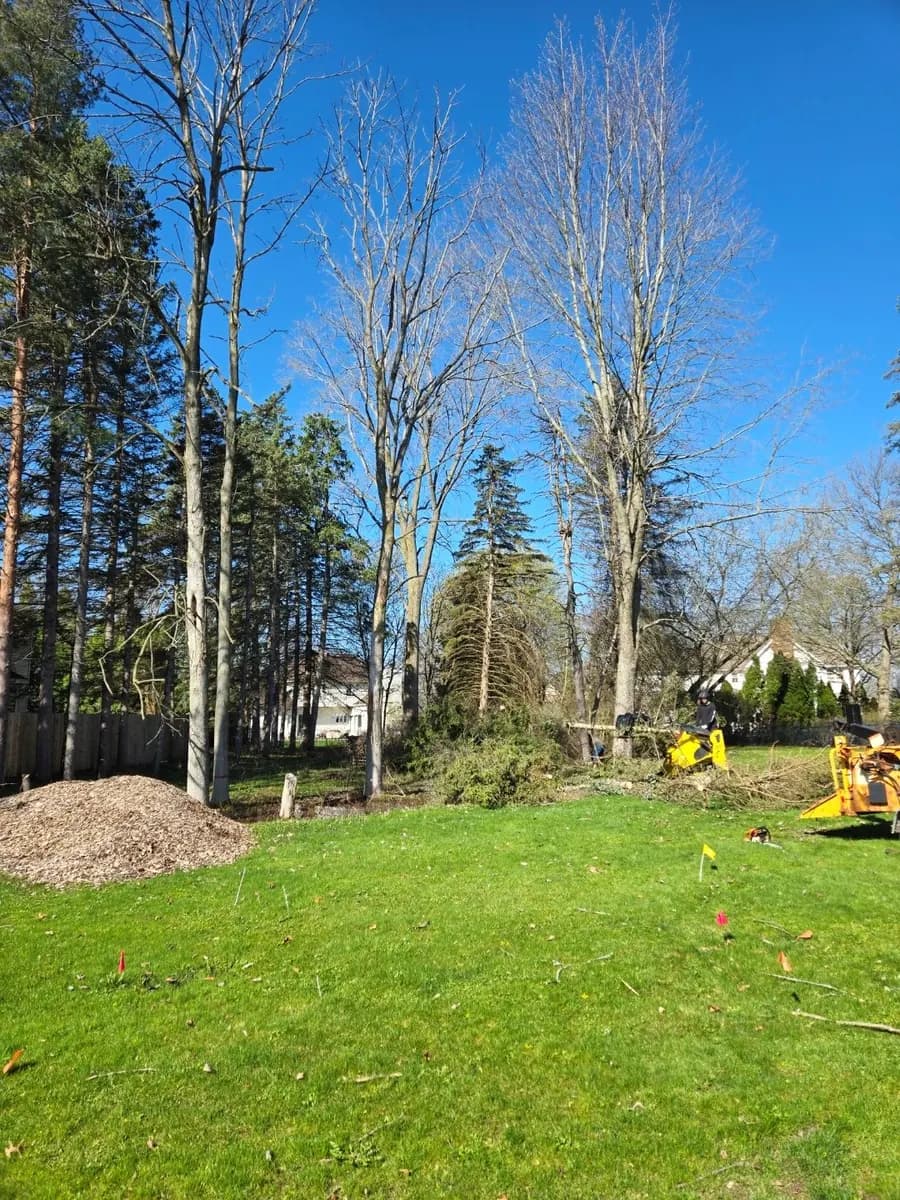
Our crew works to the defined limits and leaves the site at the finish level described in the estimate, so use plain words to describe that level. A few examples of how owners describe it:
- Brush and small trees cut, larger trees kept, stumps left low
- Trees and brush removed, stumps ground, logs stacked on site
- Everything removed and hauled, stumps ground, the area raked
One customer's review of stump and debris work along a fence line describes the finish this way: "The fence line was completely cleaned Of all limbs, logs, stump, etc. and they leveled out the ground."
A written scope checklist
Before you sign off on a land clearing estimate, make sure it answers each line:
1. What the land is for when the job is done 2. The boundaries, marked on the ground and on a sketch 3. Which trees, shrubs or sections stay 4. What is included: brush, undergrowth, trees, or all of it 5. The route in, the gate, and where equipment and trucks park 6. Steep or wet areas, and any plan to seed or cover the ground after 7. What must be protected: fences, drives, septic, well, utilities 8. Which stumps are ground, and whether a utility locate is in place 9. Where the debris goes: hauled, chipped or stacked 10. The finish level, in plain words
Tell us what the land is for and what you want cleared. We will walk the site and put the scope in writing. You can request a free estimate, contact us with questions, or see finished clearing work in the gallery.
Common questions
- What should a land clearing scope include?
- The boundaries, the trees that stay, what is being removed, how the crew gets in, what must be protected, what happens to stumps and debris, and the finish level, all in writing before work begins.
- Do I need to call 811 before clearing land?
- If the job involves digging, yes. Alabama 811 says to contact 811 before you start, with 2 to 10 full working days of notice, and the request is free. Stump grinding goes below the surface, so ask about a locate request whenever grinding is in the scope.
- Should I grind the stumps or leave them?
- It depends on the next use of the land. Grinding reduces the visible stump below grade so the area can move toward seed, sod, landscaping or another use, and it does not excavate the entire root system. A wooded buffer or fence row may not need it.
- Do I need a permit to clear land in Alabama?
- Check whether yours does. For construction projects, ADEM's list of cases that need stormwater permit coverage includes a site that will disturb one or more acres, or a smaller site that is part of a common plan of development or sale that will ultimately disturb one or more acres. ADEM also reviews projects for owners who are unsure. Burning debris has separate permit rules.