Routine trimming and urgent trimming are two different jobs
Alabama Cooperative Extension describes two kinds of pruning. Cultural pruning happens seasonally or annually to shape a tree, encourage flowers or fruit, and bring light and air into the canopy. Urgent pruning addresses safety concerns, such as limbs that threaten people or buildings, or broken, diseased or dead parts of a plant.
Our tree trimming page makes the same point about timing: timing depends on the species, the tree's condition and the reason for pruning. Dead or hazardous limbs should be assessed promptly. Routine pruning can be scheduled around tree health and weather.
Start by deciding which type of job you have, since the calendar matters for routine work.
The dormant season is the window for routine work
For most plants, Extension recommends pruning during dormancy, after first frost and before spring growth begins, or right after flowering. For old, established trees, its advice is to prune during winter or early spring.
Extension's guide to street trees gives Alabama dates: major pruning cuts should be made from December to March. Pruning earlier may start growth you do not want, while pruning later may cause the tree to bleed heavily. The same guide says that bleeding is not necessarily harmful to the tree.
Fall is also a good time to look over your trees. Extension's October guidance on assessing tree structure says it is easier to see a tree's structure and judge its risks after the leaves have dropped.
The guide also says it is generally accepted to prune while a tree is not actively growing. Regular pruning keeps most cuts on young, smaller wood.
Some trees follow their own schedule
Not every tree in a North Alabama yard fits the winter rule. Extension's pruning guide gives these notes:
- Flowering trees and shrubs follow what Extension calls the May Rule. If a plant begins blooming before May, prune right after the blooms fade. If it blooms in May or later, prune in late February or early March, before new spring growth starts.
- Maples and elms tend to bleed if cut during active growth, so early winter, from December to early January, is better for some species.
- Pines pruned in spring and summer are more likely to have insect problems. Extension says they must be pruned in winter.
- Crapemyrtle flowers in summer, so the guide says to prune it before new growth begins in the spring.
If you are not sure what kind of tree you have or when it blooms, ask before anything is cut.
How much to take off, and why topping hurts a tree
The amount removed and the placement of the cuts both matter. Extension's guidelines for having trees pruned include these:
- Avoid removing more than 25 percent of the canopy in a single pruning.
- Remove less canopy from mature trees, since younger trees usually respond better to pruning.
- Let the tree's vigor set the amount. More vigorous trees can withstand more pruning than stressed trees.
- Avoid cutting limbs back to the trunk, which exposes the trunk to decay, and avoid leaving stubs.
Extension's pruning guide says, "Trees should not be topped." It says topping causes fast growth of suckers and water sprouts. Those soft new branches are easily damaged by wind, and large cut surfaces are open to insects and disease. Extension also says wound dressings do not help a tree heal.
That matches how our service page describes our work: the crew evaluates the tree and recommends cuts that address the problem without removing more canopy than necessary.
Signs a limb should not wait for winter
A dead or damaged limb can fail in any month. Extension's guide to street trees says injury to the tree, safety reasons or pruning schedules may require pruning at other times of the year. It also says the risks and benefits of pruning out of season should be weighed. These signs point toward calling now:
- Dead limbs hanging over the roof, driveway, deck or a play area.
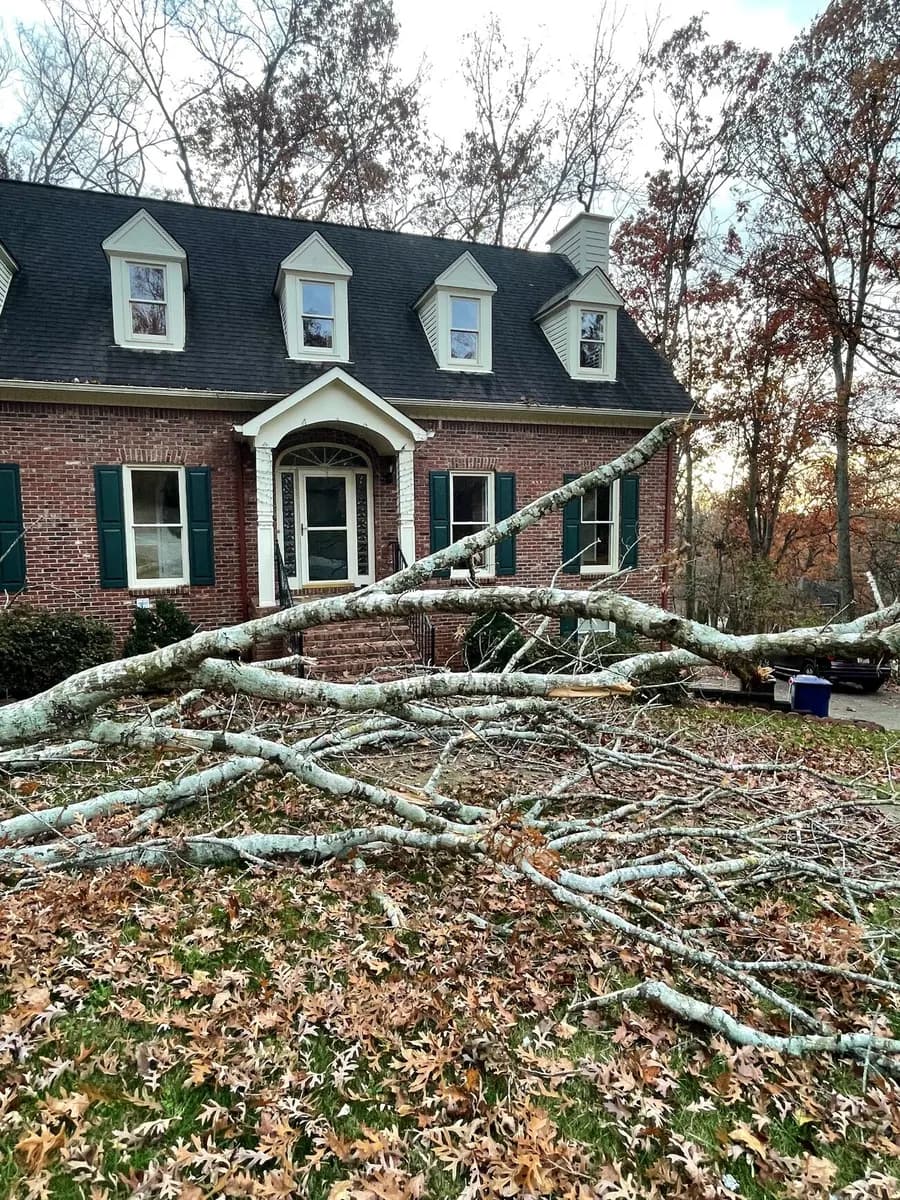
- Broken limbs still hanging in the canopy after a storm.
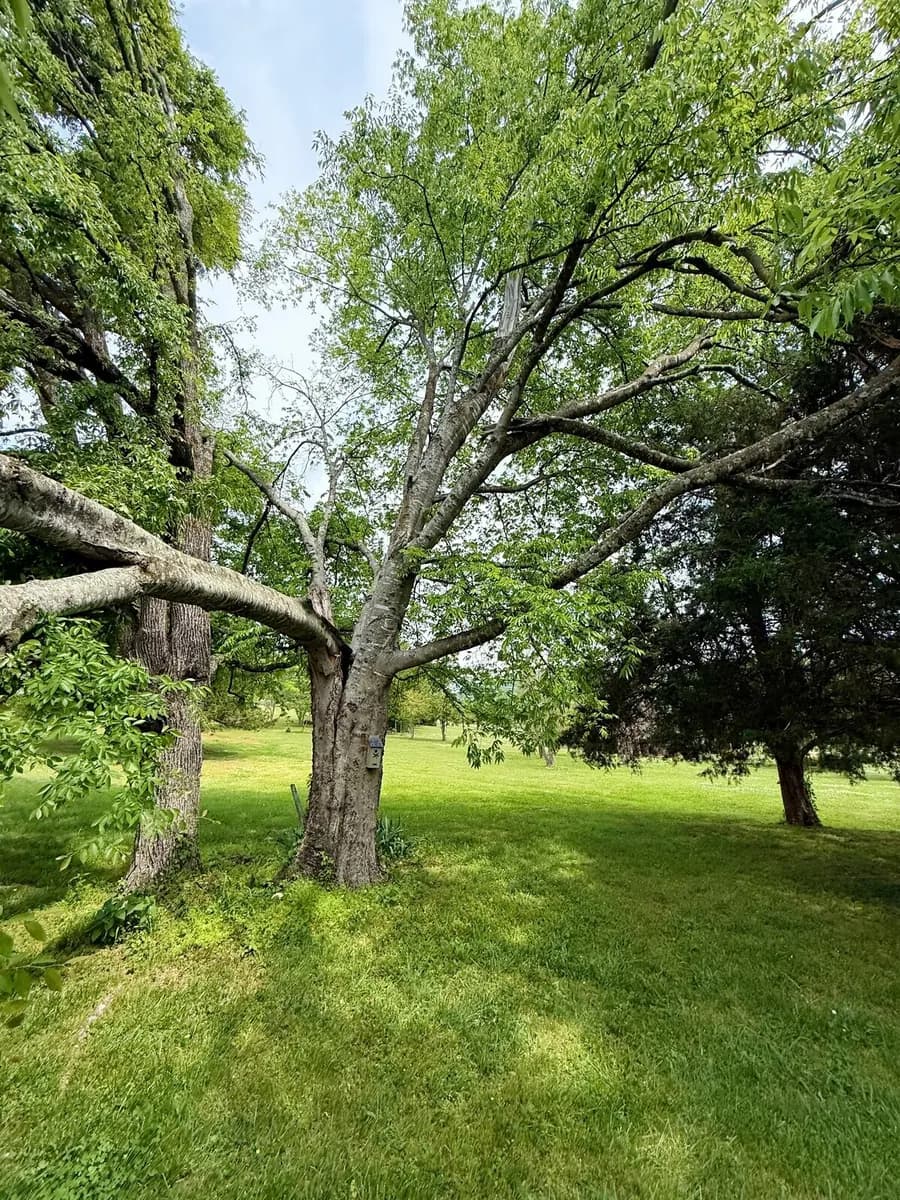
- Cracks where a large limb joins the trunk, or cracks in the trunk itself. After a storm, Extension calls every crack a major problem that needs immediate attention and says "Trees with cracks may fail at any time."
- Branches rubbing or resting on the roof, gutters or siding.
- Limbs growing into or toward a power line. Those go to the utility first, as described in the next section.
Check from the ground and keep your distance. Do not climb a ladder into a damaged tree or cut a heavy limb yourself. Large limbs are cut in stages so the weight comes off before the final cut, and that work belongs to a crew with the right equipment.
One customer wrote that the crew "helped us with a couple of limbs of the tree that were hanging over our shed." If a tree already has a storm-damaged limb down, our guide on what to do when a tree falls in a storm covers the first steps.
Limbs near power lines go to the power company first
Extension's power line guidance says, "Never attempt to remove branches or trees from utility lines." It warns that even television cable and telephone lines can hurt you, and it says to avoid trees in contact with any wires.
If Huntsville Utilities is your power company, it runs a Line Clearance program. Its page says trees growing along the side, into, or toward electric power lines or utility space shall be trimmed, and that trees directly under and growing into electric power lines should be removed or trimmed. For questions about tree trimming near its lines, the utility lists its Line Clearance office at 256-535-1224 or trees@hsvutil.org.
If a tree or limb has already come down on a line, treat the line as live. Stay away from the tree and anything it touches. Our storm guide covers that situation.
Trimming in summer heat and dry spells
Extension's guidance on drought-tolerant landscapes says to avoid summer pruning except to remove dead, diseased or damaged wood. Summer pruning encourages new leafy growth and inhibits root growth.
A summer visit should focus on the hazard: the dead limb, the broken branch or the limb on the roof. Shaping and thinning a healthy tree can wait for the dormant months.
Planning a trim
When you ask us about trimming, we start with the problem you need solved. We inspect the canopy, limb structure, nearby targets and access. The estimate explains the limbs or areas included so the crew and the property owner have the same expectations. Debris removal is included when it is part of the written estimate.
Tell us why you want the work done: roof clearance, a dead limb, a heavy side of the tree, or a canopy that has grown over the driveway. You can read more about tree trimming in Huntsville, see photos of past jobs, or request a free estimate.
Common questions
- What is the best month to trim trees in Huntsville?
- For routine work on most established trees, Alabama Cooperative Extension says major pruning cuts should be made from December to March. Flowering trees that bloom before May are the exception, and Extension says to prune them right after the blooms fade.
- Can a dead or broken limb wait until winter?
- It should not wait if it hangs over a roof, a driveway or a place where people spend time. Extension says safety reasons can require pruning at other times of the year, and dead, diseased or damaged wood can be removed in summer.
- How much of a tree can be trimmed at one time?
- Extension's guideline is to avoid removing more than 25 percent of the canopy in a single pruning, and to take less from mature or stressed trees.
- Should I top my tree to make it shorter?
- No. Extension says trees should not be topped, because topping produces fast growth of soft branches that are easily damaged by wind, and leaves large cut surfaces open to insects and disease.
- Who handles tree limbs near power lines in Huntsville?
- Start with Huntsville Utilities. Its Line Clearance office is at 256-535-1224. Do not try to cut or pull branches off a line yourself.
Sources
- Alabama Cooperative Extension System, "Woody Landscape Plants: Pruning"
- Alabama Cooperative Extension System, "Street Trees: Site Selection, Planting, and Maintenance"
- Alabama Cooperative Extension System, "Assessing the Structure of Trees in the Landscape"
- Alabama Cooperative Extension System, "Drought-Tolerant Landscapes for Alabama"
- Alabama Cooperative Extension System, "Caring for Trees: Post-Storm Assessment"
- Alabama Cooperative Extension System, "Caring for Trees: Power Lines"
- Huntsville Utilities, "Tree Trimming and Line Clearance"