We are a tree service in Huntsville and nearby North Alabama, not an insurance company. We cannot tell you what your policy covers or whether a claim will be paid. This guide brings together what the Alabama Department of Insurance and the Insurance Information Institute (Triple-I) say about fallen trees, so you know what to check in your policy and what to ask your agent or insurer.
Safety comes before any of it. If a tree has brought down a power line or is resting on one, stay away from the tree and anything it touches, then call your power company. For Huntsville Utilities customers, the utility says: "If you see a downed power line, do not approach or attempt to drive over it. Call us immediately at 256-53-LIGHT (256-535-4448)." Our guide on what to do when a tree falls in a storm lays out the first steps in order.
When a policy may pay to remove a fallen tree
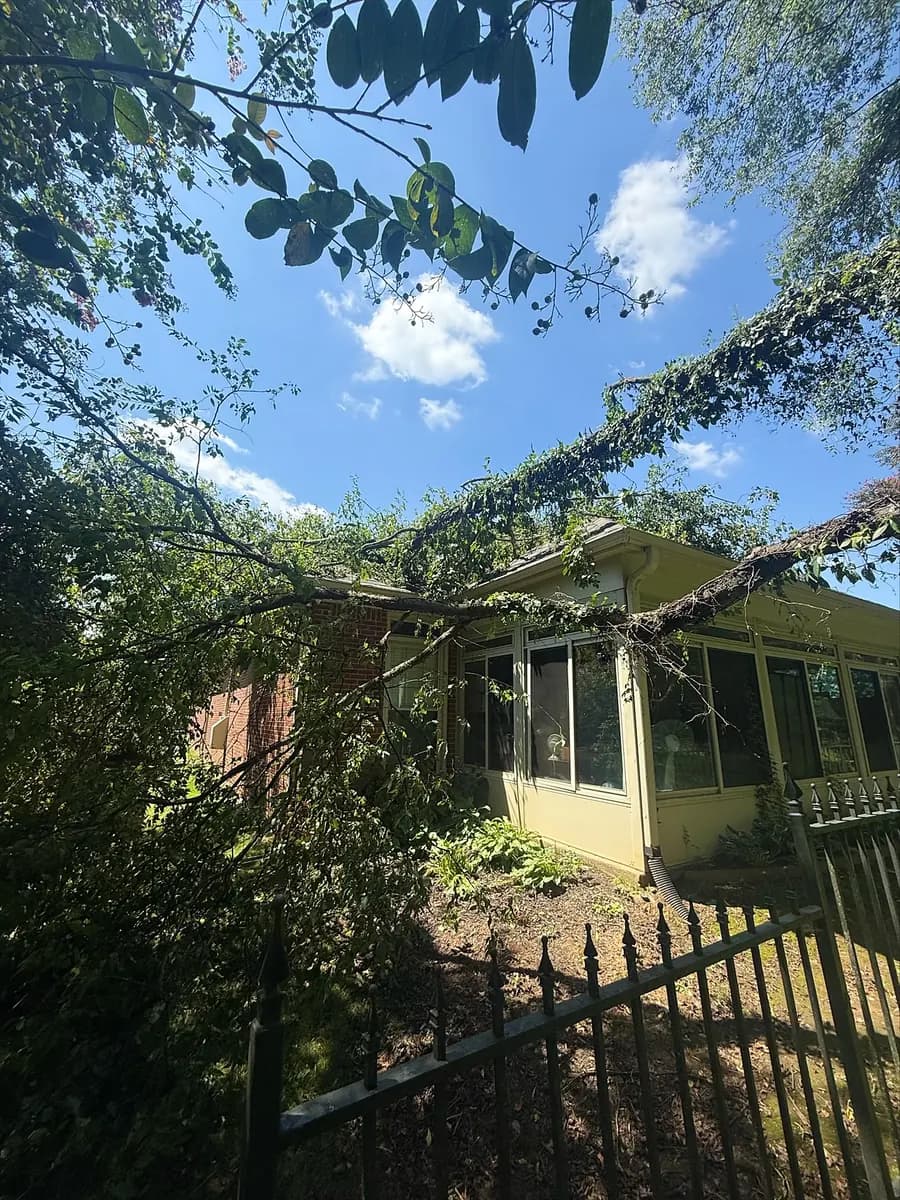
Take a tree that hits your home or another structure your policy covers, such as a detached garage. According to Triple-I, a standard homeowners policy covers damage to that structure and its contents. It says this applies to trees felled by wind, lightning or hail.
Removing the tree is handled separately. Triple-I says that when a tree hits a covered structure, a homeowners policy covers the cost of removing it, "generally up to about $500 to $1,000, depending on the insurer and the type of policy purchased."
The Alabama Department of Insurance gives a similar example. Even when there is coverage, it says, it is "typically for a limited amount for the removal of these trees, such as up to $500 per tree and up to $1,000 aggregate for all trees."
Those figures are examples from consumer guides, not the limits in your policy. Tree removal coverage is typically for a limited amount, and that number can differ from one insurer and one policy to the next. Read your own policy, then ask your agent or insurer what yours says.
The Alabama Department of Insurance also lists two cases where a policy may pay even though the tree hit nothing: a tree that blocks a driveway access onto the property, or one that blocks a handicapped ramp into the structure. Triple-I says only that some insurance companies may pay in those cases, so check your policy before you count on it.
When tree removal is usually not covered
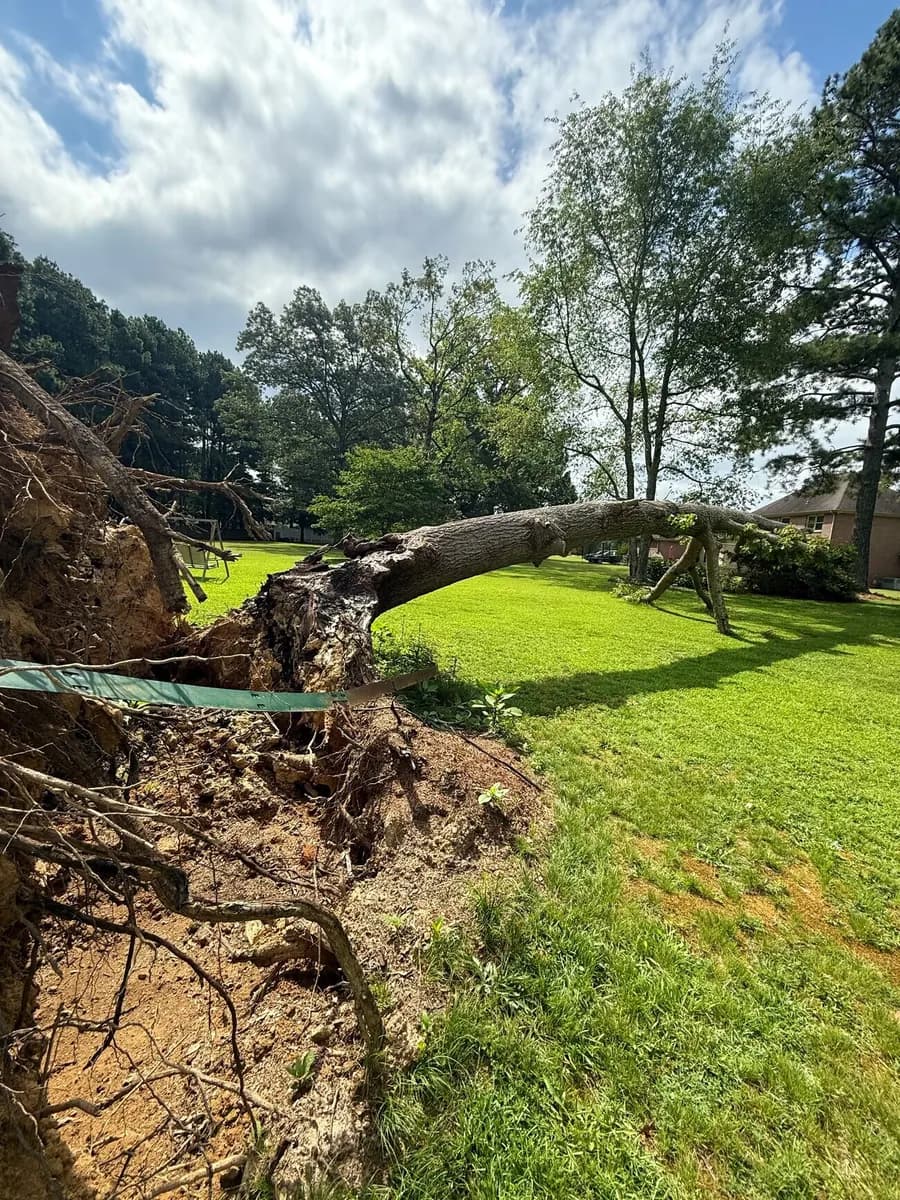
If a tree falls in the open yard and hits nothing, the answer usually changes. Triple-I says there is generally no coverage for debris removal if the fallen tree did not hit a covered structure. Its claims guide adds that most insurance companies "won't pay to remove trees that have fallen causing a mess in your yard."
A standing tree is a different question. Triple-I's guidance says that "poor maintenance is not covered by homeowners insurance," and it encourages owners to keep their trees healthy and prepare them for storms. If a dead, cracked or leaning tree stands over the house, do not count on your policy to pay for taking it down. Ask your agent, then deal with the tree before a storm does. Our guide to signs a tree needs to be removed covers what to look for, and what tree removal costs in Huntsville explains what drives the price.
Flooding is a separate gap. The National Association of Insurance Commissioners (NAIC) says flood damage from ground water or rain runoff is not covered by a standard homeowners policy and needs separate flood coverage.
The trees themselves have their own limit
Hauling away a fallen tree is one type of coverage. Replacing a lost tree or shrub is another. Triple-I says standard policies cover damage to trees and shrubs from disasters or accidents such as fire, lightning, explosion, theft, aircraft, vehicles not owned by the resident, vandalism and malicious mischief. That coverage is generally limited to 5 percent of the amount of insurance on the structure of the house. Most insurers also cap the amount for any one tree, shrub or plant, Triple-I says.
If you are hoping to replace a large shade tree the storm took, ask your agent how your policy treats it.
A neighbor's tree, or a tree on your car
The tree does not have to be yours to land on your house. Triple-I says you can file a claim with your own insurance company if a tree lands on your home, no matter who owns the tree. In some situations where the tree came from a neighbor's property, your insurer may try to collect from the neighbor's insurer through a process called subrogation. If that works, Triple-I says, you may be reimbursed for your deductible.
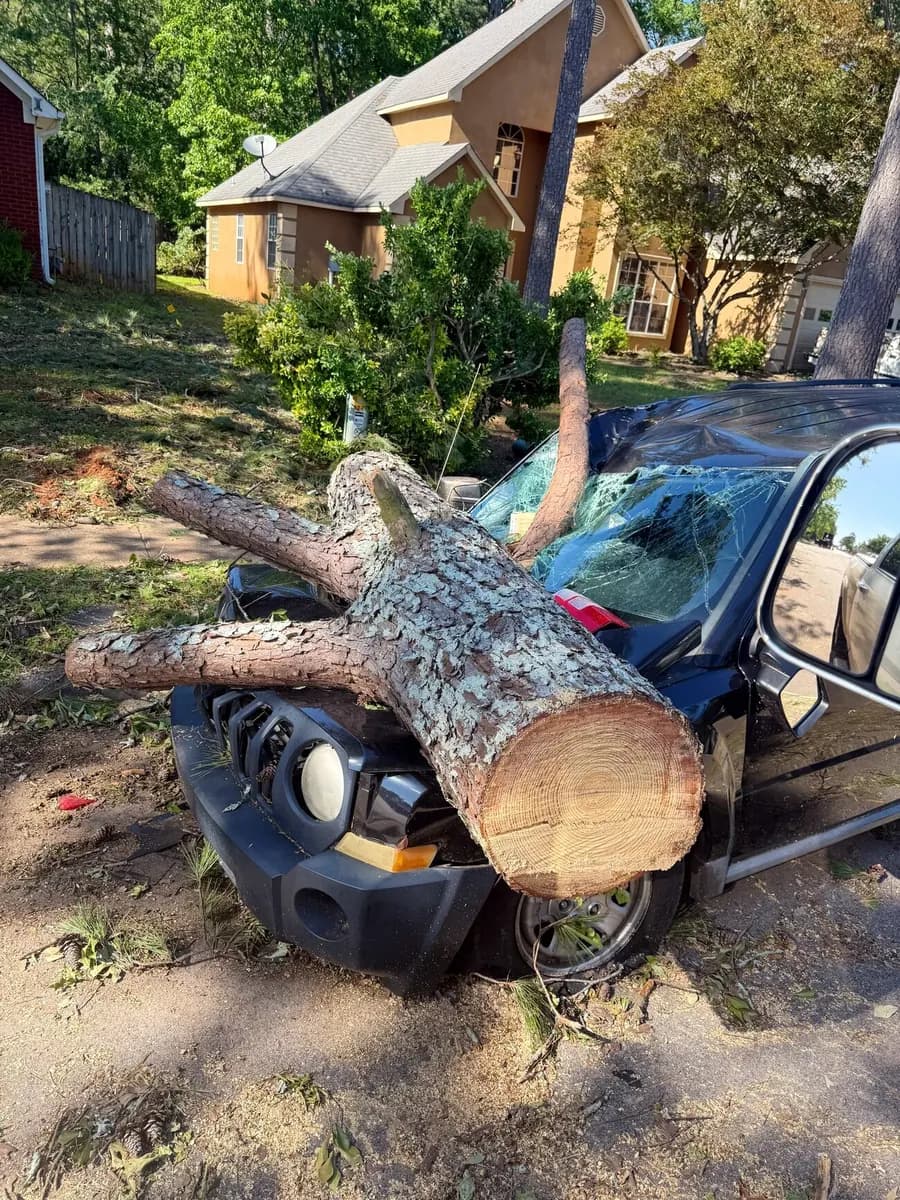
For a car, the Alabama Department of Insurance says, "Homeowner Insurance does not extend coverage to your damaged automobile." If a tree came down on a vehicle, ask your auto insurance company what your auto policy covers.
Before the tree is cut up
Once a tree is cut and hauled off, the scene the storm left is gone. Triple-I suggests photographing or videotaping the damage, and it says not to throw out damaged items until the adjuster has visited. Take photos only from a safe spot, away from any line and out from under damaged trees, as our storm guide explains.
Triple-I's claims guide lists questions to ask your agent or insurance company early on:
- Whether the damage is covered under the terms of your policy
- How long you have to file a claim
- Whether your claim exceeds your deductible
- Whether you will need estimates for repairs
Also ask whether your insurer wants to see the tree before anyone cuts it up.
On estimates, the Alabama Department of Insurance says many policyholders do not realize they can get their own estimates for repairs to help them negotiate a settlement, and that "it is always best to get at least two estimates."
Getting a written estimate for storm tree work
We take down storm-damaged trees across Huntsville and nearby North Alabama. When you call, tell us what fell or split, what it is touching or blocking, and whether a power line or a structure is involved. If a power line could be involved, call your power company first. When conditions allow the work to be evaluated and the project is a fit, the estimate identifies the tree work, debris handling and practical finish for the site.
What your policy pays toward that work is between you and your insurer. You can contact us, request an estimate, or read more about storm-damaged tree removal.
Common questions
- Does homeowners insurance pay to remove a tree that fell but hit nothing?
- Generally not. Triple-I says there is generally no coverage for debris removal when the fallen tree did not hit a covered structure. Some insurers may pay if the tree blocks a driveway or a handicapped ramp, so check your policy.
- Will insurance pay to take down a dead or leaning tree before it falls?
- The consumer guides describe removal coverage for trees that have already fallen. Triple-I also says poor maintenance is not covered. Ask your agent or insurer what your policy says before you plan on it.
- How much will insurance pay for tree removal?
- It depends on your policy. The Alabama Department of Insurance gives the example of "up to $500 per tree and up to $1,000 aggregate for all trees," and Triple-I says "generally up to about $500 to $1,000." Your own limit is in your policy.
- Who pays when a neighbor's tree falls on my house?
- Triple-I says you can file a claim with your own insurance company no matter who owns the tree. In some situations, your insurer may then try to collect from the neighbor's insurer, and if it succeeds you may be reimbursed for your deductible.
- Does homeowners insurance cover a tree that fell on my car?
- The Alabama Department of Insurance says homeowners insurance does not extend coverage to your damaged automobile. Ask your auto insurance company about your auto policy.
Sources
- Alabama Department of Insurance, "Frequently Asked Questions and Answers" (storm damage)
- Insurance Information Institute (Triple-I), "If a tree falls on your house, are you covered?"
- Insurance Information Institute (Triple-I), "Settling insurance claims after a disaster"
- National Association of Insurance Commissioners, "Homeowners Insurance"
- Huntsville Utilities, "Power Outage Update" (downed power lines)