Read our land clearing cost guide for price ranges. Our how to define a land clearing scope guide covers what a clearing estimate should spell out.
Put the work in order
Most lot projects follow the same handful of steps. The details change with the project, but the order usually stays the same.
1. Your surveyor marks the property lines, and your builder or designer marks where the house, shop, drive or fence will go. 2. You decide which trees stay, and mark them. 3. Utility locates and any permit checks are done before digging or ground disturbance starts. 4. The tree work happens inside the marked area. Trees, brush and undergrowth come out, and the debris is handled the way the estimate says. 5. Stumps are ground where the plan calls for it, or left for the builder's site work. 6. The site goes to the builder, excavator or fence installer for the ground work.
For construction lot clearing, we start with an on-site review of access, vegetation, boundaries and the finish required. The estimate states exactly what Huntsville Tree Service can complete. Your builder, site contractor or surveyor handles grading, excavation, soil compaction and surveying.
Start with the survey and the stakes
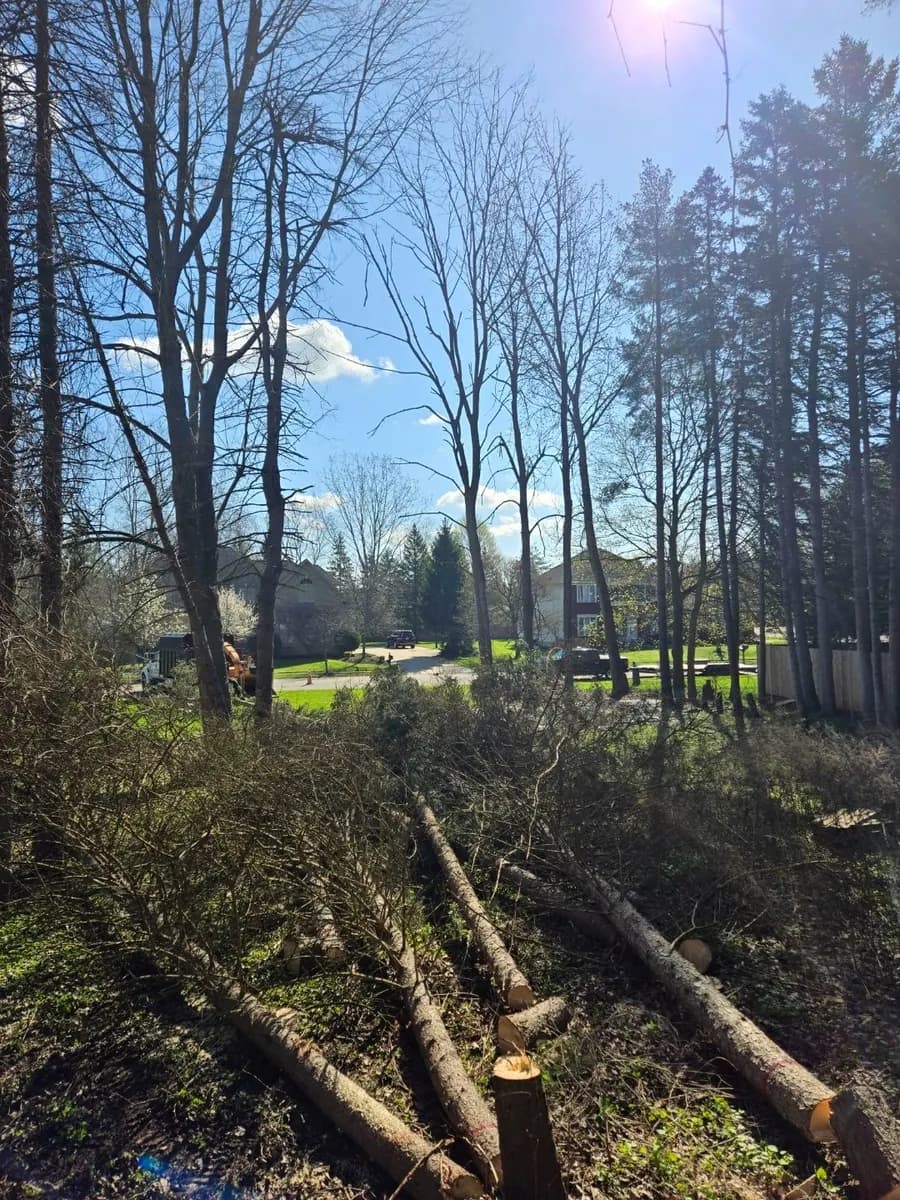
Clearing goes to lines, so property lines need to be on the ground before clearing begins. Your surveyor establishes the property corners. If a tree or fence row sits near the line and you are not sure which side it is on, ask your surveyor before anyone cuts it. This guide cannot tell you where your line is or who owns a tree on the boundary.
The footprint comes from your builder or plans. Have the corners of the house pad, shop and driveway edges staked, along with any room the builder needs around them for trucks and materials. Clearing to stakes is easier than clearing to a drawing.
Mark the trees you want to keep
Before any machine arrives, decide which trees stay and mark them with ribbon or paint. Tell your builder too, since the builder's equipment comes after ours.
Mississippi State University Extension, writing about building near trees, says "Excavation, trenching, soil compaction, and grading may damage roots and alter critical soil conditions." It also says that "the effects are often not immediately visible and may take years to fully appear." Work after clearing may still affect a tree kept close to a new slab or a new drive. How close the ground work comes to a tree you keep is a question for your builder.
Stumps and roots under a slab or driveway
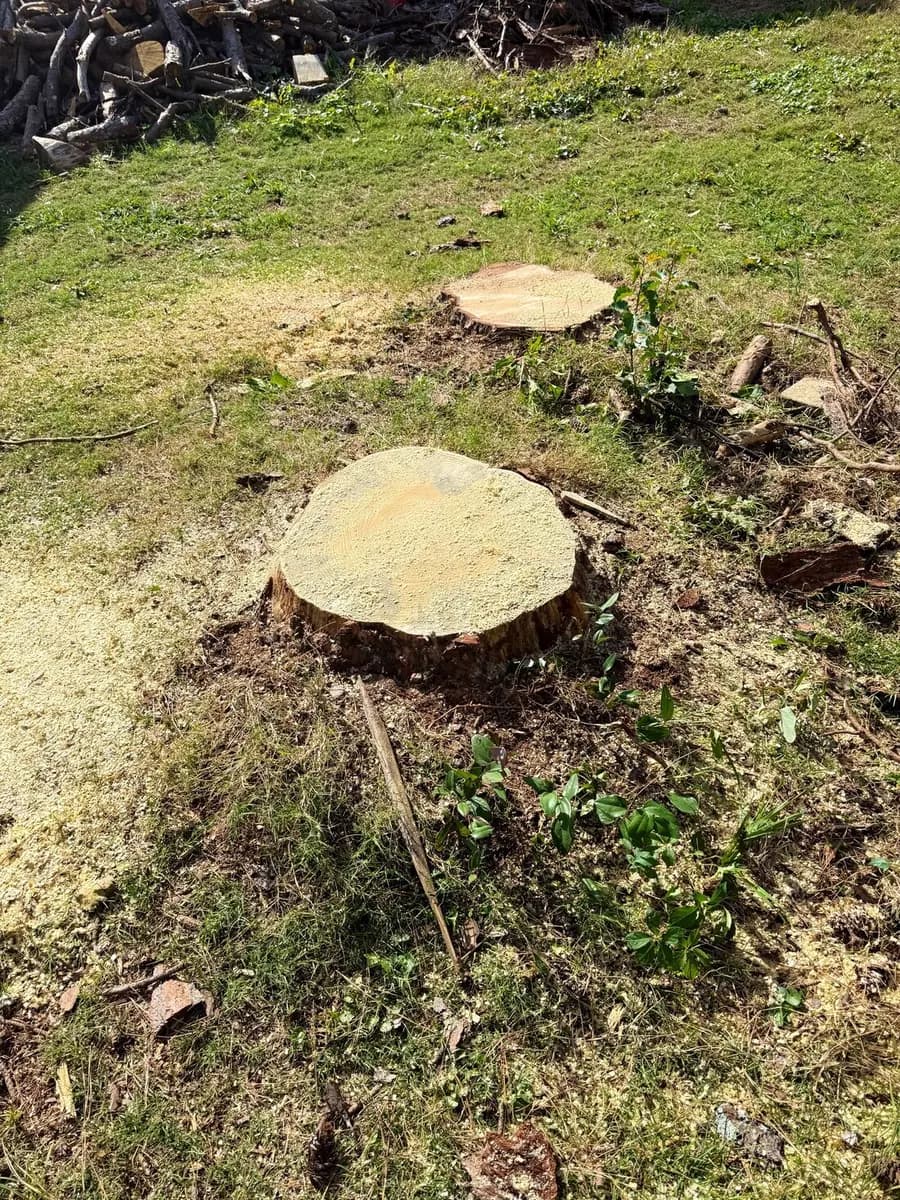
Stumps are where the handoff to your builder matters most. Stump grinding reduces the stump below grade. It does not excavate the entire root system. The ground-out area can then move toward seed, sod or landscaping.
Under a slab, shop floor or driveway, your builder, excavator or an engineer decides what has to come out of the ground beyond the stump you can see. They also decide how deep it goes and how the soil is prepared before concrete or gravel goes down. Before the tree work is priced, ask whether they want stumps inside the footprint ground or left for their own site work. Put their answer into the clearing estimate.
Our stump grinding vs. root removal guide explains the difference in more detail, and our stump grinding page covers what grinding includes.
What each project needs
### A house pad
A house needs the most planning. Settle the pad, drive, septic area and the space the builder needs to work before clearing starts, because each one changes which trees come out. If you are on septic, ask your builder or the septic designer where the system will go so the tree plan leaves that area as they need it.
### A shop or barn
Most shops are simpler than a house, with a pad and a way to reach it. Clear for the doors you will actually use and for the trucks delivering the building and the concrete. Ask the builder how much room they need beside the pad.
### A driveway
Alabama 811 lists driveways among the projects that call for a locate request before digging. Near the street, the tree at the end of the drive may not be yours to remove. Inside Huntsville city limits, the city ordinance counts platted rights-of-way as public land and says "Any person or agency, private or public, needing to remove a tree six inches or more in d.b.h. from public land shall first obtain by telephone a removal permit from the city forester." Outside the city, check with your own town or the county, and see our guide to tree removal permits, easements and utility lines for those rules.
### A fence line
Fence-line clearing is usually the narrowest job, a strip along the line so the installer can set posts. Confirm the line with your surveyor before clearing. Alabama 811 lists fence posts among the projects that call for a locate request, since post holes go into the ground.
One customer's review of stump and debris work along a fence line says, "The fence line was completely cleaned Of all limbs, logs, stump, etc."
Utility locates and permit checks
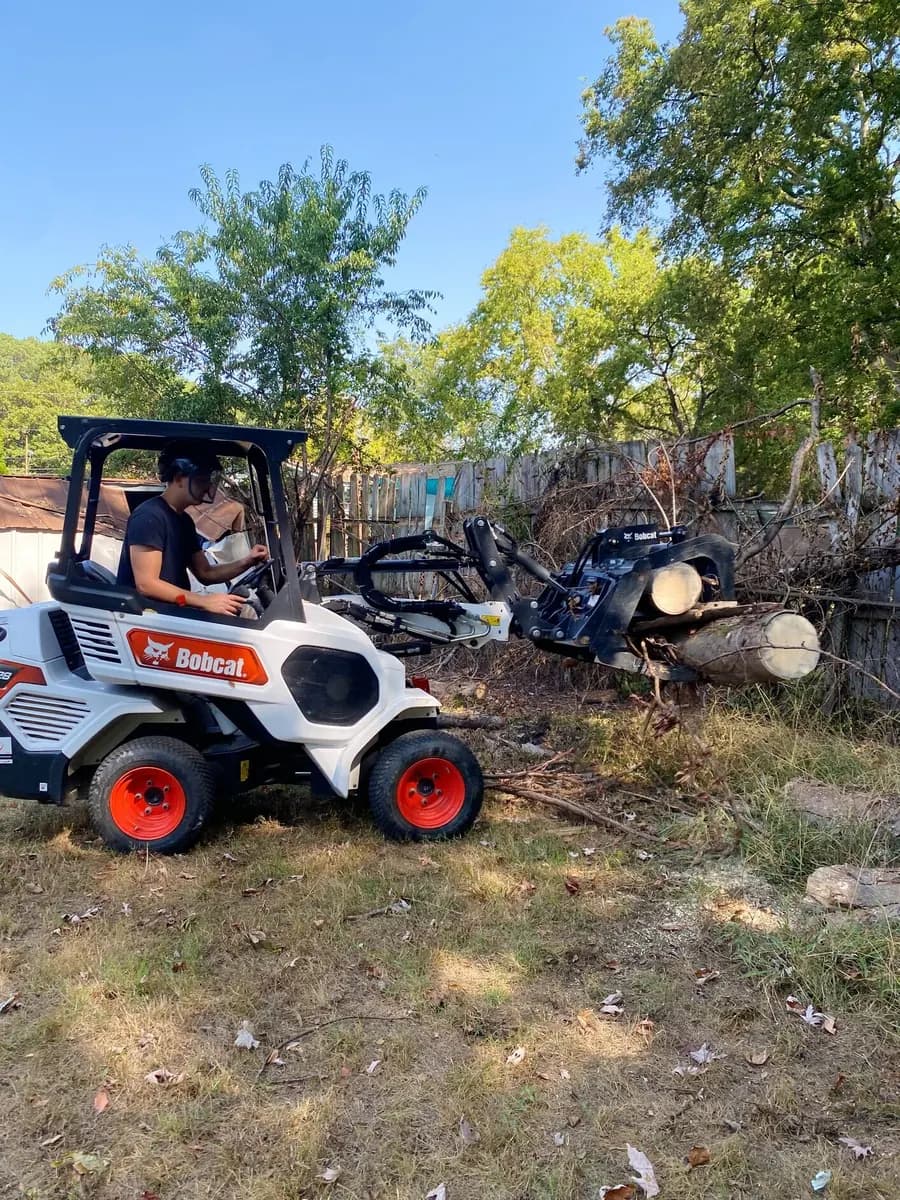
Alabama 811 says "If your project involves digging, contact 811 before you start." Submit a request online or call 811. The request is free and needs 2 to 10 full working days of notice, not counting the day you submit it. Its list of projects includes grading, fence posts and driveways. Ask whoever is doing each digging step, including stump grinding, whether a locate request is in place.
For a building project, check whether you need a construction stormwater permit. The Alabama Department of Environmental Management (ADEM) lists several cases that need permit coverage. They include "a site that will disturb one or more acres of land," and a smaller site that is part of a common plan of development or sale that will ultimately disturb one or more acres, "such as a home lot in a residential subdivision." ADEM lists fence installation or maintenance among the minor activities that do not need coverage. If you are unsure, ADEM reviews projects sent to it by email.
Handing the lot to your builder
When the tree work is done, the builder should know what was done and what was left. Pass along:
- The area that was cleared, and the trees that were kept
- Which stumps were ground, and which were left for site work
- Whether the debris was hauled, chipped or stacked on site
- Any locate request number, and the permit answers you got
Our crew works to the defined limits and leaves the site at the finish level described in the estimate. The estimate itself is a good record to hand over. You can request a free estimate, contact us with questions, see finished clearing work in the gallery, or read more about land clearing in Huntsville.
Common questions
- What comes first, the tree work or the builder's site work?
- After the property lines and footprint are staked, the tree work usually comes first. The builder, excavator or fence installer does the ground work after trees, brush and stumps are handled as the estimate says.
- Does stump grinding get a lot ready for a slab or a driveway?
- Grinding reduces the stump below grade, and it does not excavate the entire root system. Your builder, excavator or engineer decides what has to come out under a slab or a drive and how the soil is prepared. Ask them before the tree work is priced.
- Do I need to call 811 before clearing a lot?
- If the project involves digging, Alabama 811 says to contact 811 before you start. The request is free and needs 2 to 10 full working days of notice. Its project list includes grading, fence posts and driveways.
- Do I need a permit to clear a lot for a house in Alabama?
- Check whether yours does. Among the cases ADEM lists, permit coverage is required for a site that will disturb one or more acres, or a smaller site that is part of a common plan of development or sale that will ultimately disturb one or more acres, such as a home lot in a residential subdivision. Inside Huntsville, a tree six inches or more in d.b.h. (trunk diameter taken from the circumference measured 4½ feet above the ground on the uphill side, per the ordinance) on public land, including a platted right-of-way, needs a removal permit from the city forester.